00%LOADING
LINXAI precision joint and vision module

Technology

Moat Built via Full‑Stack In‑House R&D

Proprietary SVIP Algorithm

S‑LINXAI | V‑Vision | I‑Intelligence | P‑Platform

Multi‑sensor fusion combined with reinforcement learning

Built upon our self‑developed training framework, we adopt Mixture‑of‑Experts, cross‑attention mechanisms, and vision‑aided reinforcement learning to significantly boost the generalization capability of quadruped robots.

Real2Sim: Real‑World Data Feeds Simulation
Large volumes of real‑robot data enable “inverse‑style” training that derives simulation parameters from physical‑world observations, greatly narrowing the Sim2Real Gap. We have established an end‑to‑end automated pipeline covering data collection, model training and physical‑robot adaptation. Simulation parameters (e.g. joint torque constants, moments of inertia) are trained from real‑robot datasets.
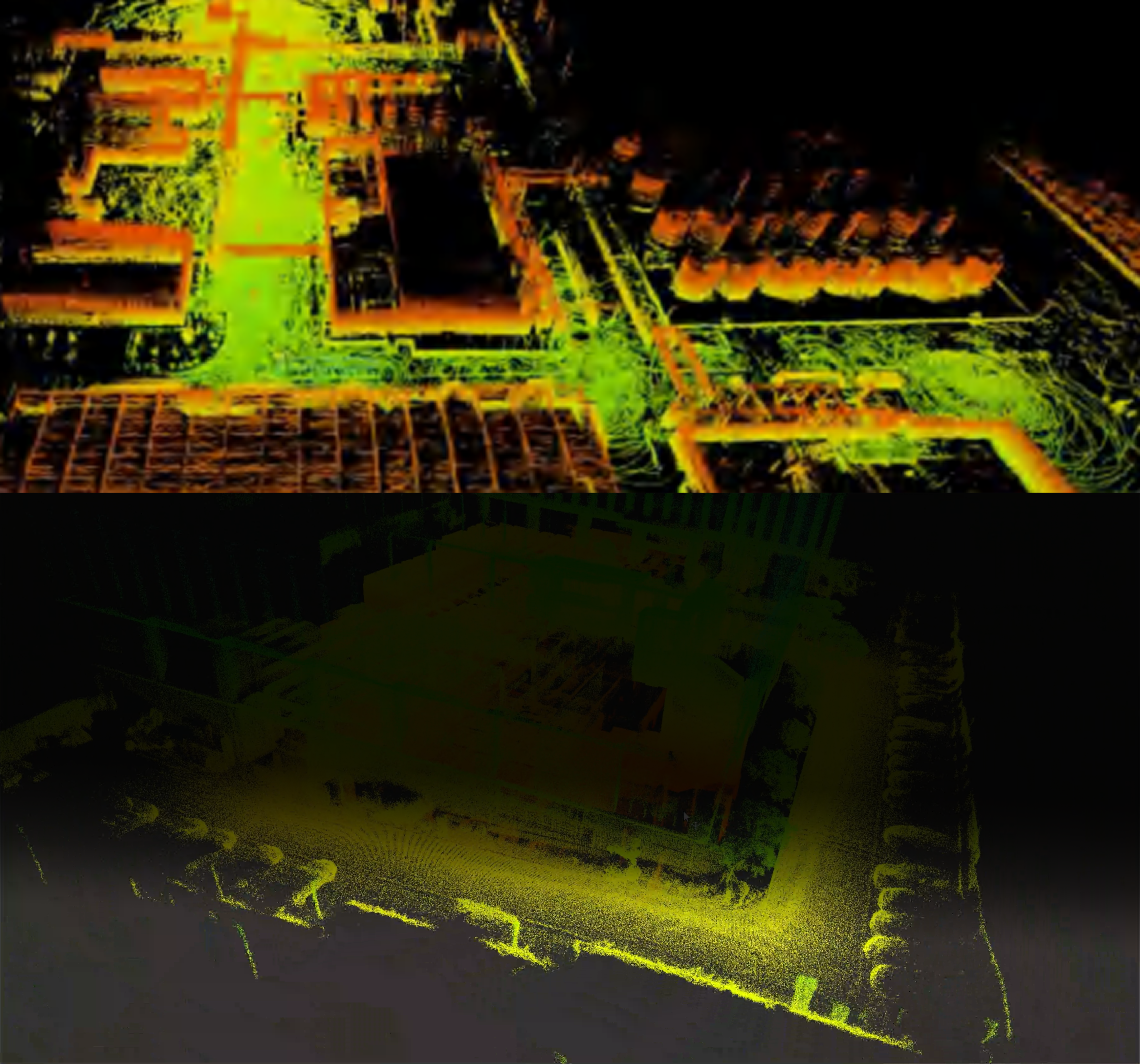
Multi‑sensor fusion combined with reinforcement learning

All‑Terrain Motion Control: Reduced leg collision, extended service life

Fusing vision, LiDAR and proprioceptive sensing, our robots deliver outstanding environmental adaptability and reliably negotiate complex terrain and harsh operating conditions. Our high‑efficiency Real2Sim framework leverages real‑world data to calibrate simulation environments. Powered by an exteroceptive‑sensing‑enhanced reinforcement‑learning architecture, models are trained at massive scale in simulation and seamlessly deployed onto physical hardware, improving training efficiency and cutting deployment costs

Two‑Stage Exteroceptive‑Sensing‑Enhanced Reinforcement Learning
Vision model Medium‑scale RL model Adopting the mainstream large‑model architecture of attention and Mixture‑of‑Experts, the model supports both proprioceptive and exteroceptive sensing inputs. The network is lightweight‑optimized to satisfy real‑time inference requirements. It adaptively adjusts gaits for varied terrain and exhibits strong generalization performance.

High‑Performance Precision Joint Module

Delivers robust power for stable operation of heavy‑duty robots | IP67 Industrial‑Grade Protection

Featuring high‑integration design, internal‑external circulating thermal technology and full‑scenario reliability validation, the joint module maintains stable output under industrial‑grade conditions such as high‑temperature heavy‑load, vibration and shock.

Thermal‑Management Breakthrough

Controllable temperature rise under 100 kg payload over 1.5‑hour continuous operation

High‑Integration & Lightweight Design

Highly integrated reducer‑motor assembly reduces reducer weight by approximately 15%, improving joint lightweight performance and torque density.

Overheat‑Resistant Under Continuous Load

Adopting an outer‑stator configuration, major heat sources are rapidly conducted to the aluminum‑alloy housing to enhance thermal stability under sustained high‑load conditions.

High Efficiency & Consistency

Leveraging automotive‑grade manufacturing processes, prefabricated coils boost slot‑filling factor up to 80%, outperforming the ~65% of conventional machine‑winding processes, and delivering improved efficiency and product consistency.

Technical Specifications

LINXAI Joint‑Motor Specification Table

ModelOutput‑Shaft ParametersMechanical ParametersDrive SchemeIngress Protection
Peak Torque (Nm)Mechanical Dimension (mm)Weight (kg)EncoderIP
LS75_W13.5Φ88×73.50.62Single‑encoderIP67
LS100_W33Φ99×65.30.88Dual‑encoderIP66
LS100_A100Φ99×68.31.00
LS100_H100Φ99×63.11.00IP67
LS100_K180Φ99×61.71.19
LS100_L180Φ102×821.41
LS140_S300Φ140×812.52
LS140_T300Φ140×812.52

Explore More Products & Solutions

LINXAI Robotics serves benchmark customers covering energy, defense, firefighting, security and higher‑education sectors.

Product Documents
Product Documents
Industry Applications
Product Center
Product Center
About Us
About Us
LINXAI robot core structure

Industrial-Grade Embodied Intelligence Specialist

We deliver expert‑level technical support, thorough developer documentation, and end‑to‑end ecosystem enablement.